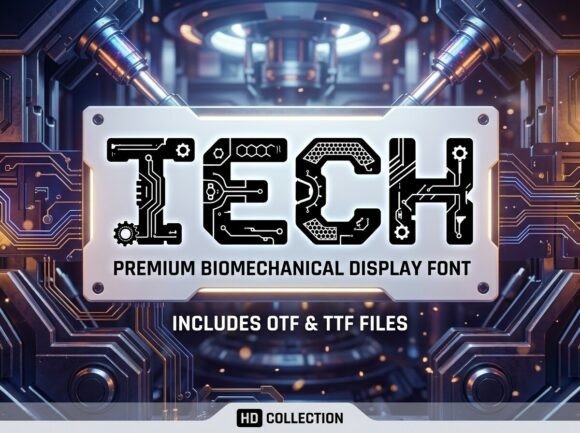
Tech Font: Bold Biomechanical Type for Makers
The heat from my heat press was just beginning to fade when I peeled back the carrier sheet, revealing the crisp, angular letters of Tech adhered perfectly to the black cotton tote. It wasn’t just text; it looked like a component of the bag itself, as if the fabric had been engineered in a lab rather than sewn in a studio. This is the magic of working with a premium biomechanical display font. It transforms ordinary handmade goods into objects that feel futuristic, precise, and undeniably high-quality. For crafters and small business owners looking to break away from the ubiquitous handwritten scripts and rustic serifs, Tech offers a commanding sci-fi presence that demands attention.
From Digital File to Physical Impact
I first encountered Tech while brainstorming a new line of cyberpunk-inspired candle labels. My usual go-to typefaces felt too soft, too organic for the metallic wicks and dark glass jars I was using. I needed something that mirrored the cold, hyper-advanced machinery aesthetic of the scent profile—ozone, steel, and rain. When I typed out the product name in Tech, the transformation was immediate. The bold, mecha-inspired strokes gave the label an industrial edge that elevated the perceived value of the candle before the customer even smelled it.
This experience highlighted a crucial lesson for any maker: your choice of typography is part of your product’s texture. Just as you select linen over cotton or matte over gloss, selecting a decorative font like Tech sets the mood. It tells the buyer that this item is modern, edgy, and carefully constructed. Whether you are designing printable wall art for a gamer’s bedroom or creating packaging for a boutique tech accessory shop, the visual personality of your font communicates brand identity faster than any logo could.
Versatility in Handmade Product Design
While Tech shines brightest as a display typeface, its utility across various handmade categories is surprising. Here is how I have integrated this typeface into different aspects of my creative workflow:
- Product Labels and Packaging: The sharp angles of Tech look incredible on minimalist sticker labels. I use it for short product names and key features, ensuring the text remains legible even at smaller sizes. It pairs beautifully with clear vinyl stickers on amber glass bottles or matte black boxes.
- Greeting Cards and Invitations: For birthday invitations with a space or robot theme, Tech provides a fun yet sophisticated header. It avoids looking childish by maintaining a sleek, professional structure. I often use it for the main title, such as "Level Up" or "Mission Launch," while keeping the details in a simpler font.
- Apparel and Tote Bags: As seen with my tote bag experiment, Tech works exceptionally well with heat transfer vinyl (HTV). Its thick strokes hold up well during cutting and weeding, reducing the risk of tearing delicate pieces. It creates a bold statement on shirts, hoodies, and canvas bags without needing complex graphics.
- Digital Downloads and Printables: If you create planner pages or digital journals, Tech can serve as a striking header for sections like "Tech Specs," "Future Goals," or "System Reset." It adds a thematic consistency to digital products aimed at productivity enthusiasts or sci-fi fans.
Readability and Practical Application Tips
Because Tech is a decorative font with a distinct biomechanical style, it is best suited for short phrases, titles, and names. Using it for long paragraphs of body text can strain the reader’s eyes and diminish the impact of its unique design. I recommend reserving Tech for headlines, logos, and emphasis points. For example, on a wedding welcome board with a modern industrial theme, I used Tech for the couple’s names and the date, but switched to a clean sans serif font for the itinerary details. This hierarchy ensures that the decorative element captures attention while the informational text remains easy to read.
When using cutting machines like Cricut or Silhouette, always test cut a small section first. The intricate connections in some biomechanical fonts can sometimes require slight adjustments to cut settings. However, Tech is designed with boldness in mind, which generally makes it more forgiving for vinyl cutting than thinner, more delicate script fonts. For printed materials, ensure you are using a high-resolution file to maintain the sharpness of the edges. Blurry prints can make the precise lines of Tech look amateurish, so always check your mockup previews at 100% zoom before sending files to the printer.
Creating Cohesive Brand Identity with Font Pairing
To maximize the effectiveness of Tech, consider how it interacts with other typefaces in your design assets. A common mistake is pairing two dominant display fonts, which creates visual chaos. Instead, balance the heavy, mechanical presence of Tech with something understated. A simple sans serif font works wonders for body text, providing a neutral backdrop that lets Tech shine. Alternatively, for a more eclectic look, you might pair it with a minimal handwritten font for small accents, though this requires careful spacing to avoid clashing styles.
Consistency is key to brand recognition. If you use Tech for your logo and product titles, carry that through to your social media graphics and website banners. This repetition helps customers associate that specific angular, futuristic look with your shop. Over time, the font becomes a visual shorthand for your brand’s quality and style. Whether you are selling physical merchandise like mugs and signs or digital templates, a consistent typographic voice builds trust and professionalism.
Licensing and Technical Considerations
Before incorporating Tech into your commercial products, always review the included license. Most premium fonts come with specific terms regarding physical goods, digital downloads, and web use. Ensure that your intended use—whether it’s printing on t-shirts for sale or including the font in a editable Canva template—is covered. Additionally, check the file formats provided. Having access to OTF, TTF, and potentially web-friendly formats ensures you can use the font across all platforms, from your design software to your online store.
Also, explore any alternates, ligatures, or swashes included in the font family. These extra characters can add subtle customization to your designs, allowing you to tweak the look of specific letter combinations for a more unique touch. Multilingual support is another feature to verify if you plan to sell internationally, ensuring your product labels and packaging can accommodate various character sets without losing their stylistic integrity.
Incorporating Tech into your creative toolkit opens up a new avenue of expression. It moves beyond the traditional crafts aesthetic, offering a sleek, modern alternative that resonates with contemporary audiences. By understanding its strengths in display use and pairing it wisely, you can create products that not only look good but feel innovative and meticulously crafted.